“Turn your passion into a business” is one of the most repeated pieces of career advice, and one of the most likely to backfire. Plenty of women who loved baking, photography, or making things with their hands have watched that joy disappear the moment it became a job with deadlines and difficult customers.
Ask this before you start charging
Would you still do it if nobody paid you?
This isn’t a trick question. If the honest answer is no, that’s useful information, it might mean the hobby is better left as a hobby, or that only one specific part of it (teaching it, rather than doing it, for example) is worth monetizing.
What part do you actually want to sell?
“Turning a hobby into a business” usually means one of three different things: selling what you make, teaching others how to do it, or curating and reselling other people’s work in the space. Each has a different workload and a different relationship to the hobby itself, so it’s worth being specific about which one you’re actually building.

Testing demand without over-investing
Before buying inventory, building a website, or renting a table at every craft fair in town, sell a small batch first, to friends, at one local market, or through a simple online post. This tells you whether strangers will pay your price before you’ve sunk real money into scaling. It’s the same principle covered in how much money you actually need to start a business: spend after you have proof of demand, not before.
Protecting the hobby part once money enters
Not everything has to be for sale
One of the fastest ways to lose the joy in a hobby-turned-business is letting every project become a commissioned piece with someone else’s specifications. Deliberately keep some of your work just for yourself, with no client and no price tag attached.
Price for your time, not just your materials
A common and costly mistake is pricing handmade or creative work at the cost of materials plus a small markup, which usually works out to a few dollars an hour once your time is counted. Price for your actual hourly value, the way you would price any other side hustle, even if it means charging more than feels comfortable at first. If that discomfort runs deeper than one price tag, working on your money mindset for career change helps you see where it comes from.

A pricing example that shows the gap
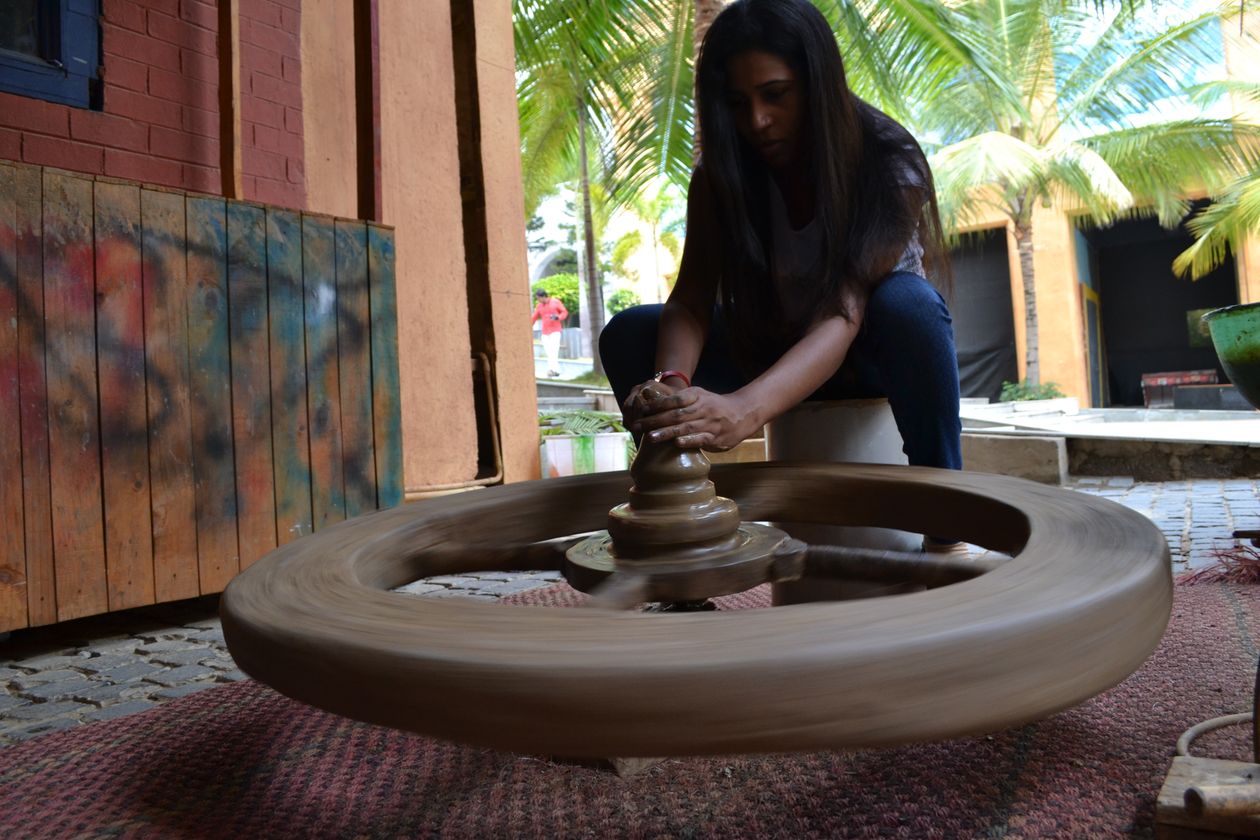
Say you make ceramic mugs. Clay, glaze and kiln time come to about $9 a mug. A typical “materials plus a bit” price would be $18 to $20. But each mug takes around 75 minutes once you count throwing, trimming, glazing, photographing and packing. At $20, you’re earning roughly $9 an hour before marketplace fees, and those fees take another few dollars.
Now price it the other way. If you want $25 an hour for your time, the labor alone is about $31, plus $9 in materials, plus a margin for fees and breakage. That lands closer to $45. Whether buyers will pay $45 is something you find out by testing, not guessing. If they won’t, that’s useful too: it may mean a different product (a set, a custom piece, a class) is the part worth selling.
When your hobby becomes a business on paper
In the US, the IRS doesn’t use a single dollar figure to decide whether you’re running a hobby or a business. It looks at factors like whether you operate in a businesslike way, keep proper records, try to make a profit and depend on the income. A common rule of thumb in its guidance is a profit in three of the last five years.
The distinction matters. Hobby income is still taxable, but under current federal rules you generally can’t deduct hobby expenses against it. A business can deduct its costs, and once your net self-employment earnings reach $400 in a year, self-employment tax applies. Marketplaces and payment apps may also send you a Form 1099-K once your sales pass the federal reporting threshold. None of this is a reason not to start. It’s a reason to open a separate bank account and keep receipts from the first sale, and to check with a tax professional once the money becomes regular. Rules outside the US differ, so look up your own country’s guidance.
When to keep it small vs. go bigger
A hobby business is often at its best staying small and enjoyable, and there’s no rule that says it has to grow. Consider going bigger only if demand consistently exceeds what you can produce at a price that still feels fair to you, and if scaling wouldn’t require giving up the specific parts of the hobby you actually love.
If pricing your work at what it is worth still feels uncomfortable, look at how established sellers do it: Etsy business ideas for women starting over includes a simple pricing formula you can adapt to almost any handmade product. And if the hobby is a skill people would pay to learn, the encore entrepreneur paths are worth a look.
Frequently asked questions
Will turning my hobby into a business ruin it?
It can, if every part of the hobby becomes tied to a paying customer. Protecting some non-commercial time with the hobby is the most reliable way to prevent this.
How do I price handmade or creative work fairly?
Calculate your materials cost, then add your time at a real hourly rate, not a token amount. Compare the total to what similar work sells for before finalizing your price.
Do I need a business license to sell a hobby part-time?
Requirements vary by location and how much you’re selling. Check your local city or state small business requirements, since even small-scale selling sometimes requires basic registration.
What’s a sign my hobby side business is ready to grow?
Consistent demand that exceeds what you can comfortably produce, combined with pricing that already feels sustainable, not demand you’re only meeting by underpricing your time.